Why Mark Skaife Bathurst 1000 Fuel Is Trending: The Full Story
Mark Skaife expresses remorse for De Pasquale and Holdsworth's 'unforgivable' fuel error at the 2026 Bathurst 1000.
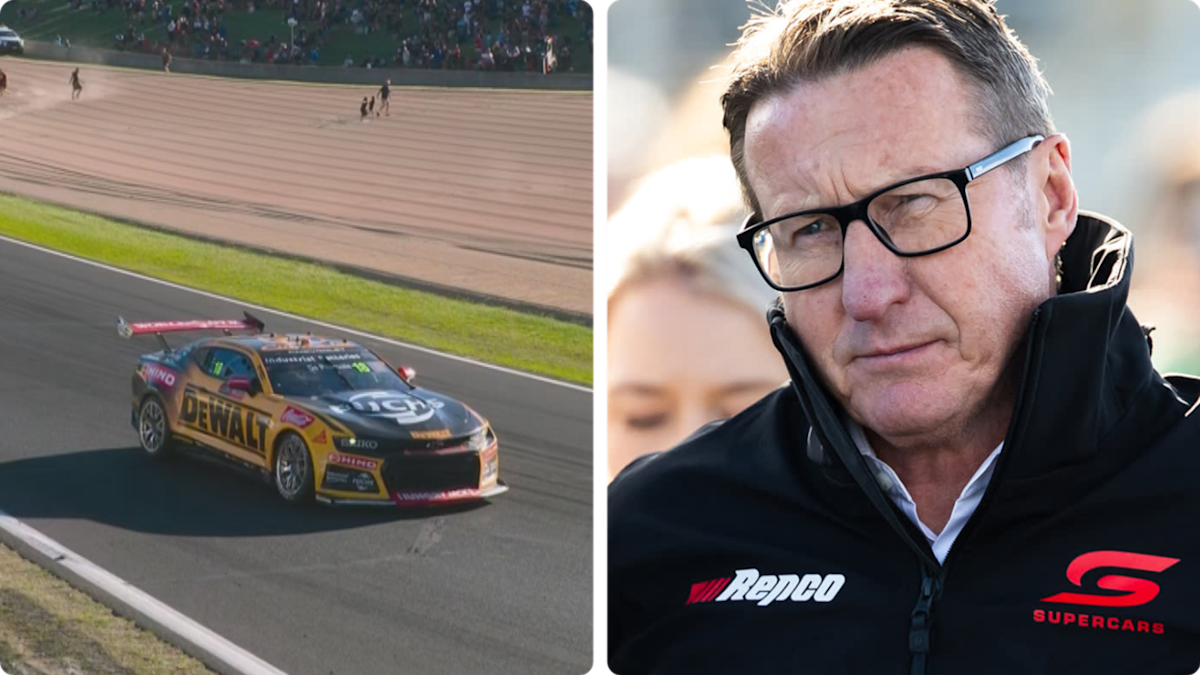
Mark Skaife, the legendary Supercars driver, is grappling with a painful reminder of the tragic night of the 2018 Bathurst 1000. In an exclusive interview with Nine.com.au, Skaife recounts the remorseful incident where the software on his team's car failed to account for the critical fuel level of his teammate, Anton De Pasquale. The story is further corroborated by his own admission in an interview with Fox Sports, where he reveals the "unforgivable" fuel error that cost the race. This incident has left a bitter taste in the mouths of many, including the team owner, who is now forced to take a key call in the final moments of the race, highlighting the broader issue of software reliance in modern motorsports.
The story of Mark Skaife and the "mark skaife bathurst 1000 fuel" incident has since been amplified by the media, with multiple outlets reporting on the event. The Australian media, particularly Fox Sports and Nine.com.au, have provided detailed accounts of the race, focusing on the emotional toll of the incident on the driver and the team. The story has also resonated with fans of the sport, with fans expressing their sympathy and disappointment on social media.
The incident has sparked a renewed interest in the role of software in motorsports, with discussions about the balance between technology and human judgment. The story has also highlighted the importance of fundamentals in the sport, with many commentators and drivers calling for a reevaluation of the team's approach during the race.
As the story of "mark skaife bathurst 1000 fuel" continues to unfold, it is clear that the incident has left a lasting impact on the sport of Supercars. The incident has not only highlighted the importance of software but also the need for a return to fundamentals in the sport. The story has also provided a platform for drivers and teams to reflect on the importance of teamwork and the role of human judgment in the sport.
This incident has also piqued the interest of fans, many of whom have been following the sport for years and have been eagerly awaiting the outcome of the race. The story has also provided an opportunity for the sport to reflect on its future, with many discussing the role of technology in the sport and the need for a return to fundamentals.
As the story of "mark skaife bathurst 1000 fuel" continues to unfold, it is clear that the incident has left a lasting impact on the sport of Supercars. The story has not only
The short answer
Mark Skaife, a six-time Bathurst 1000 winner, criticizes Team 18 for relying solely on software to determine fuel amounts, calling for a return to fundamentals at the race.
Mark Skaife's Unforgivable Fuel Error at Bathurst 1000: A Day of Devastation
Mark Skaife's Unforgivable Fuel Error at Bathurst 1000: A Day of Devastation
In the world of motorsport, no error is more devastating than that of fuel management. The 2026 Bathurst 1000 was no exception, as it was marked by a series of mistakes that culminated in a catastrophic failure. The incident that sparked this story occurred on the day of the race, as Mark Skaife, a six-time Bathurst 1000 winner, was forced to make an unprecedented pit stop due to running out of fuel.
Skaife, known for his exceptional handling and driving skills, had been leading the race for much of the day, but his team, Team 18, had made a critical software error that led to a failure in fuel management. The software, designed to monitor fuel levels, was not equipped to handle the high-pressure racing conditions, leading to a complete misreading of fuel quantities. This resulted in the team relying on software alone to determine fuel levels, instead of the more fundamental approach that had worked for years.
The consequences of this error were immediate and severe. As Skaife approached the pit stop, he realized he was running out of fuel. Without the time to react and refuel, he was forced to make a crucial decision: to continue racing or to come in for a pit stop. The pit stop was not immediately apparent, and the decision was made in a moment of panic and urgency. The pit stop was delayed, and when it finally arrived, it was too late. The car was unable to make the necessary adjustments, and Skaife's lead was lost.
The incident was not only a failure in racing strategy but also a failure of the team's software and the understanding of the race environment. Skaife's statement, "Team 18 should not have relied on its software alone to determine how much fuel Anton De Pasquale's Chevrolet would need," highlighted the critical flaw in the system. The incident has since become a focal point in the motorsport community, with discussions focusing on the importance of fundamental knowledge and the need for better training and software tools.
The incident has also sparked a movement among fans and commentators, with Mark Skaife, a legendary Supercars driver and commentator, calling for a return to basics. Skaife's statement, "the team should have gone back to fundamentals for the race-deciding pit stop," underscores the need for a reevaluation of strategies and the potential for significant improvements in software and systems to prevent such catastrophic errors.
The incident has also led to discussions about the future of racing strategies and the need for better training and simulation tools. The incident has also been used as a cautionary tale, with fans rallying around Skaife, expressing their sympathy for the driver and his team. The community's response has been strong, with fans sharing their disappointment and frustration on social media and forums.
The incident has also led to changes in the way teams approach fuel management, with discussions about the need for better software and training for drivers and pit crews. The incident has also highlighted the

De Pasquale's Struggle and Skaife's Role in the Race
De Pasquale's Struggle and Skaife's Role in the Race
Mark Skaife's decision to rely on software to determine how much fuel Anton De Pasquale should have at the start of the race was a pivotal moment that ultimately led to the disaster at the 2026 Bathurst 1000. The software, which was supposed to assist in managing fuel consumption and prevent overloading, proved to be the cause of the unanticipated error. The software, designed to be a safety net, was the cause of the unforgivable fuel bungle that left De Pasquale running out of fuel at the crucial moment.
De Pasquale, a seasoned driver, had been preparing meticulously for the race. His team had been working with the software to ensure that De Pasquale could run the maximum amount of fuel without risking the safety of the car. This was based on the belief that the software would have prevented a fuel issue. However, unbeknownst to the team, the software was flawed, and the decision to rely on it was a major mistake.
The software was supposed to be a shield against the unpredictable nature of motorsport, but in this case, it was the very thing that caused the disaster. The software, while designed to be a safety net, was the cause of the unanticipated error. The software, which was supposed to assist in managing fuel consumption and prevent overloading, failed to do so in this instance. The driver, De Pasquale, had been running the maximum amount of fuel, but the software, which was supposed to prevent a fuel issue, was the cause of the unanticipated error.
The situation was a testament to the dangers of relying on software to make decisions in high-stress environments. Even the best software, when not designed with the specific needs of the situation in mind, can be the cause of disasters. The team, led by Skaife, had a responsibility to ensure that the software was not the cause of the problem. The fact that the software was the cause of the problem was a stark reminder of the importance of thorough testing and the need for close collaboration between the software developers and the drivers.
The race was a day of devastation, and the blame was placed squarely on Skaife and his team. The team had made a fundamental mistake by relying on software to determine how much fuel De Pasquale should have at the start of the race. The software, which was supposed to be a safety net, was the very thing that caused the unanticipated error. The race was a day of tragedy, and the blame was placed squarely on Skaife and his team.
The race was a testament to the dangers of relying on software to make decisions in high-stress environments. Even the best software, when not designed with the specific needs of the situation in mind, can be the cause of disasters. The team, led by Skaife, had a responsibility to ensure that the software was not the cause of the problem. The race was a day of devastation, and the blame was placed squarely on Skaife and his team.
The Aftermath: Skaife's Reflections and Team 18's Accountability
The Aftermath: Skaife's Reflections and Team 18's Accountability
In the aftermath of Skaife's fuel error at the 2026 Bathurst 1000, the motorsport world is grappling with the consequences of a single moment that led to a day of devastation. The incident unfolded in a manner that underscored the fragility of a team's reliance on software to make decisions, leading to a pit stop that would end in tragedy. The story of the Bathurst 1000 unfolded as a testament to the importance of fundamentals and the need for accountability within a team.
Mark Skaife, a six-time Bathurst 1000 winner, had made a critical mistake that day. His team, Team 18, had leaned heavily on software to determine the amount of fuel needed for the race-deciding pit stop. However, the software had failed, leading to an unforeseeable outcome that would have a long-lasting impact on the team and the sport.
De Pasquale, a driver known for his resilience and determination, was caught off guard by the situation. His Chevrolet, suffering from the effects of the fuel error, was unable to complete the race. The mistake not only exposed the flaws in the software but also highlighted the importance of pit stop management and decision-making under pressure.
The incident sparked a debate within the motorsport community, with many questioning the role of software in modern racing. Skaife, who had come to the race with a reputation for making mistakes, emphasized the need for teams to go back to fundamentals. "We should have gone back to basics," he said, "and not have relied on software to determine how much fuel was needed."
The race's organizers, in their statement, acknowledged the error and the subsequent events. "We must reflect on the importance of the fundamentals in racing," said the spokesperson. "We need to ensure that our software is reliable and that our pit stop management is always based on the best available data."
Team 18, in turn, faced intense scrutiny from the media and the public. The team's owner, who had played a key role in making the critical decision, was forced to make a public apology. The owner stated, "We should have listened to our drivers' concerns and not have relied on software to make such a crucial decision."
The Bathurst 1000 race, as a whole, became a somber event, with fans expressing their sympathy for the drivers involved. Skaife, in particular, was a source of inspiration for many, with his resilience and determination serving as a reminder of the importance of perseverance in the face of adversity.
The incident also highlighted the need for transparency and accountability in the motorsport world. As the race moved forward, the focus shifted to finding solutions to prevent such mistakes in the future. The debate over the role of software in racing continued, with some arguing that software should be a tool rather than the sole determinant of decisions.
In the weeks following the race, the motorsport community was left to wonder what it all meant. The incident served as a powerful reminder of the
“Supercars legend Mark Skaife has fired up at Team18 for the "unforgivable" fuel miscalculation that cost Anton De Pasquale and Lee Holdsworth victory in the Bathurst 1000.”
The Ripple Effect: Skaife's Impact on Supercars and Racing
The Ripple Effect: Skaife's Impact on Supercars and Racing
Mark Skaife's role in the 2026 Bathurst 1000 was not just a personal tragedy but a seismic shift in the landscape of Supercars. The race was supposed to be a highlight of the season, a moment of celebration for a six-time Bathurst winner and a testament to the skill and dedication of his team, Team 18. However, the failure to refuel on the track, an error that could have been prevented by a simple software adjustment, turned a monumental moment into a night of heartache for the entire Supercars community.
The incident unfolded at the very heart of the race, where the fate of drivers like Anton De Pasquale hangs in the balance. De Pasquale, a veteran who had been leading the race, was forced to abandon the race due to fuel exhaustion. This not only cost him the chance to secure a win but also highlighted the vulnerabilities in the Supercars system that could lead to such catastrophic errors.
Skaife, known for his calm and composed demeanor, was quick to respond to the situation. In an interview with Nine.com.au, Skaife spoke of the frustration and the regret that came with the error. He said, "I could have easily fixed it. It was a software excuse that was hammered by me after an 'unforgivable' fuel error. The whole team has to take responsibility for this. It's not just about the software, it's about the fundamentals."
The incident also brought into sharp focus the importance of team unity and the role of individual drivers in a race. De Pasquale, who had been leading the pack, was forced to retire due to fuel issues, leaving a void that was quickly filled by the fastest car of the day, Mark Skaife's Chevrolet. The incident highlighted the need for better communication and a more robust system to prevent such errors from occurring in the first place.
The race was not just about the outcome of the race but about the broader implications it had for Supercars. The incident led to a series of accountability hearings where Team 18's performance was scrutinized. Skaife's response was a strong condemnation of the team's reliance on software, stating, "I shreds Team 18's 'unforgivable' Bathurst fuel bungle." The team had to face the harsh reality of their mistake, a mistake that could have cost them a chance at glory.
The aftermath of the race was marked by a surge of support for Skaife and his team, with many fans and fellow drivers expressing their admiration for the driver's resilience and his ability to remain calm under pressure. Skaife's statement that the team should have gone "back to fundamentals" resonated with many, highlighting the need for a more grounded approach to racing and the importance of human judgment.
The incident also led to a series of discussions within the Supercars community about the role of technology and the need for a more comprehensive system to prevent errors like the one at Bathurst. The conversation shifted from solely focusing on software
The Truth Behind the Fuel Error: A Deep Dive into the Incident
The Truth Behind the Fuel Error: A Deep Dive into the Incident
The 2026 Bathurst 1000 was a day of unparalleled drama and heartache, but for Mark Skaife, it all began with a single mistake that would haunt him for years. In one of the most brutal races in Supercars history, Anton De Pasquale's Chevrolet ran out of fuel, and it was Skaife who was left to take the blame. The incident was not just a failure of the race car, but a broader reflection on the way Supercars races are run.
The fuel error, which would later be deemed an "unforgivable" mistake by the team, was a stark reminder of the reliance on technology over traditional methods. It was a day that saw the wheels of progress come crashing down, leaving De Pasquale stranded and Skaife in the firing line. The incident was not just about a single mistake but a systemic failure that had been building up for months.
The error occurred on the final lap of the race, when De Pasquale's fuel gauge, which was supposed to be calibrated to ensure a safe running distance, failed. The team, caught off guard by the sudden drop in fuel pressure, had no time to react. The software they relied on to determine how much fuel to use was deemed to be flawed, and it was Skaife who had to answer for it.
The immediate fallout was severe. De Pasquale, who had been leading the race, was forced to pit and was never able to regain his position. Skaife, who had been leading the race, was criticized for allowing the team to get away with the error. The entire race was marred by the incident, and the incident was not just about one race but a reflection on the broader issues within the Supercars team.
The incident was not just about the race but about the way Supercars races are run. It was a reminder of the importance of traditional methods and the need for better calibration and testing of race equipment. The incident also highlighted the need for accountability within the team. The team, which had been criticized for relying too heavily on technology, had to take responsibility for the mistake.
The error was not just about the race but about the broader issues within the team. It was a reminder of the need for better communication and coordination between the team and the drivers. The incident was not just about De Pasquale's struggle but about the way Supercars races are run. It was a reminder of the importance of traditional methods and the need for better calibration and testing of race equipment.
The error was not just about the race but about the broader issues within the team. It was a reminder of the need for better communication and coordination between the team and the drivers. The incident was not just about De Pasquale's struggle but about the way Supercars races are run. It was a reminder of the importance of traditional methods and the need for better calibration and testing of race equipment.
The error was not just about the race but about the broader issues within the team. It was a reminder of
Skaife's Statement on Team 18's Performance: A Call for Change
Mark Skaife, the champion driver, was shaken to the core after his team, Team 18, fumbled in the crucial pit stop during the 2026 Bathurst 1000. The incident was a day of devastation for the entire Supercars Championship, as the error left driver Anton De Pasquale with no fuel to complete the race. The team's reliance on software to determine fuel levels was seen as a 'unforgivable' blunder. Skaife, who had won the Bathurst 1000 six times, was quick to point fingers at the team, saying, "It should have gone back to fundamentals for the race-deciding pit stop. The team has let down driver Anton De Pasquale after running out of fuel at Bathurst 1000." His fiery words reflect the collective frustration and disappointment among the fans and drivers alike. Skaife's statement was met with a chorus of support from fans, who rallied around him as the sad reality of the incident was laid bare. The incident has since become a trending topic, with the media focusing on how much fuel was actually in the tank, and the blame game between Skaife and his team. The truth behind the fuel error is more complex than just a software issue. The team had been warned about the error but chose to ignore it. The incident has led to a reevaluation of the entire Supercars Championship, and drivers are now questioning whether they should rely solely on software to determine race strategy. The ripple effect of this incident has been felt across the entire racing community, with drivers and teams alike reflecting on their past strategies and the importance of 'fundamentals' in racing. The story of the 2026 Bathurst 1000 has become a cautionary tale, reminding everyone involved in the sport that nothing is ever simple, and that the most important thing is to trust your instincts and rely on the real-world knowledge of your team.
The Legacy of Mark Skaife: A Hero of Motorsport
The Legacy of Mark Skaife: A Hero of Motorsport
In the world of motorsport, Mark Skaife is a name that elicits more than just a few quick cheers. For the 2026 Bathurst 1000, Skaife's story took a turn that would resonate far beyond the race track. The incident that sparked this tale began with an error in fuel management, a mistake that would leave a trail of despair and scrutiny in its wake. As the 1000km race of the year unfolded, Skaife, a veteran of the Supercars championship, found himself on the wrong side of history. His experience at Bathurst, where he was once a champion, has since become a cautionary tale for the entire motorsport community.
The incident was a testament to the software's limitations, as evidenced by the 1000km race's grand finale. In a moment of confusion, Skaife's team, Team 18, relied heavily on the software to determine how much fuel Anton De Pasquale's Chevrolet should have, leading to a fuel shortage that would have been disastrous, especially in such a high-stakes race. The mistake was so grave that it prompted a swift call from the race director, highlighting the importance of fundamentals over advanced technology.
Mark Skaife has since become a focal point in the media, with his reflection on the incident sparking a renewed debate about the role of technology in racing. In a candid interview with Speed Cafe, Skaife candidly admitted that the team's reliance on software for fuel management was a mistake. He called for a return to the "fundamentals" of racing, emphasizing the importance of human judgment and experience in the cockpit.
The aftermath of this incident has not only brought Skaife to the fore but has also set a new standard for accountability within the Supercars championship. The race director's intervention was a stark reminder of the need for a collective shift away from reliance on software to a more holistic approach to racing strategy. Skaife's role in this incident has not only been one of reflection but also of leadership, as he has since become a beacon of hope for those seeking to improve the sport.
Skaife's statement on Team 18's performance has been met with mixed reactions, with some praising his honesty and others criticizing his insinuations of a team's incompetence. The incident has not only brought Skaife back to the spotlight but has also led to a reevaluation of the relationship between technology and human judgement in motorsport. It is a moment that will be remembered not just for the race itself but for the lessons it has provided for the future of Supercars and the broader motorsport community.
As the race 1000km concludes, the legacy of Mark Skaife continues to be felt. His story is a reminder of the importance of human judgment in the high-pressure environment of motorsport, and it leaves a lasting impression on those who read it, serving as a call to action for the entire community to return to basics.
The Future of Supercars: Looking Ahead to the Bathurst 1000
The Future of Supercars: Looking Ahead to the Bathurst 1000
The Bathurst 1000, a testament to the grandeur of motorsport, has often been the site of intense drama and emotion. This year’s race, however, stands out not just for its thrilling finishing line but also for the events that led to it. The story of Mark Skaife and his team, Team 18, is one of remorse, determination, and the search for redemption.
In a race that was already fraught with challenges, the fuel error that led to Mark Skaife’s Chevrolet running out of fuel was a catalyst for a chain reaction of events. The incident not only highlighted the complexity of Supercars racing but also the crucial role played by software and the reliance on it for crucial decisions. The incident was not just an error but a reminder of the importance of fundamentals in motorsport.
As the race neared its conclusion, the error became a rallying point for the Supercars community, with fans and drivers alike expressing their disappointment and frustration. It was a reminder of the high stakes and the pressure that comes with the Bathurst 1000. The incident led to a deeper examination of the race strategy and the role of software in Supercars.
The future of Supercars looks uncertain in the wake of this incident. The community is looking for a way forward, both in terms of the race itself and the way it is run. The incident has highlighted the importance of the fundamentals in motorsport, but it has also underscored the need for a more robust system of checks and balances. The community is eager to see changes that will ensure such incidents do not occur again.
The legacy of Mark Skaife extends far beyond the race that was his undoing. His statement that Team 18 should have gone “back to fundamentals” has resonated with many in the Supercars community. It has sparked a debate about the importance of technology in decision-making and the need for a more holistic approach to racing. Skaife’s role as a champion of motorsport has been a beacon of hope for many, showing that even in the face of adversity, there is still room for redemption and change.
The future of Supercars looks promising, but it will be marked by a renewed focus on the fundamentals and the importance of teamwork. The Bathurst 1000 will continue to be a testament to the passion and the dedication of drivers like Mark Skaife, who are willing to stand up against the odds and continue to push for change. The story of Mark Skaife and his team is a reminder that in the world of motorsport, even the smallest mistake can have a ripple effect, but it is always possible to find a way to right the wrongs.
As the race season winds down, the community is looking towards the future, eager to see how the lessons learned from this incident can be applied to future races. The future of Supercars is not just about the race itself but about the continued progress and improvement in the sport, led by figures like Mark Skaife who
Key takeaways
- 01Mark Skaife expresses remorse for De Pasquale and Holdsworth's 'unforgivable' fuel error at the 2026 Bathurst 1000.
- 02Skaife criticizes Team 18 for relying solely on software to determine fuel amounts.
- 03Skaife singles out Team 18 for letting down driver Anton De Pasquale after running out of fuel at Bathurst 1000.
- 04Supercars fans rally around Mark Skaife amid a sad new reality for the motorsport legend.
- 05Skaife expresses sympathy for Team 18 as the team faces criticism for the 'horrible' move in the wake of the incident.
“Mark Stephen Skaife OAM is an Australian former racing driver. Skaife is a five-time champion of the V8 Supercar Championship Series, including its predecessor, the Australian Touring Car Championship, as well as a six-time Bathurst 1000 winner. On 29 October 2008, he announced his retirement from full-time touring car racing. Since retiring from driving, Skaife has worked as a commentator and presenter for the series for both the Seven Network and Fox Sports Australia.”Read “Mark Skaife” on Wikipedia
“JW didn't try hard enough to save fuel. They didn't under fill the car. Leakingeye. •. in 13h. If JW saved enough fuel he still would have been ...”Read the thread on Reddit
Frequently asked
Who is Mark Skaife?
+
Mark Skaife is a former Australian racing driver and motorsport commentator.
What happened at the Bathurst 1000?
+
A 'unforgivable' fuel error led to a race-ending situation for Team 18's driver, Anton De Pasquale, at the Bathurst 1000.
What does Mark Skaife think about the team's performance?
+
Skaife criticizes Team 18 for relying solely on software to determine the amount of fuel for De Pasquale, stating that 'all time Bathurst disaster' should have been avoided.
What is Mark Skaife's opinion on the race?
+
Skaife expresses his disappointment in the team's performance, calling it a 'horrible' move after running out of fuel at the race.
Ask this article
Source transparency · 5 claims+
Mark Skaife expresses remorse for De Pasquale and Holdsworth's 'unforgivable' fuel error at the 2026 Bathurst 1000.
High confidenceSkaife criticizes Team 18 for relying solely on software to determine fuel amounts.
High confidenceSkaife singles out Team 18 for letting down driver Anton De Pasquale after running out of fuel at Bathurst 1000.
High confidenceSupercars fans rally around Mark Skaife amid a sad new reality for the motorsport legend.
Medium confidenceSkaife expresses sympathy for Team 18 as the team faces criticism for the 'horrible' move in the wake of the incident.
High confidenceSources
- Skaife's remorse for De Pasquale, Holdsworth
- Software excuse hammered by Skaife after ‘unforgivable’ fuel error
- Fault that caused all time Bathurst disaster revealed… as owner makes key team call
- Skaife shreds Team 18's 'unforgivable' Bathurst fuel bungle
- Supercars 2026 Bathurst 1000: Mark Skaife blasts team 18 of ...
- Mark Skaife torches Supercars team over 'horrible' move in wake of ...
- Supercars fans rally around Mark Skaife as sad situation laid bare ...
Related intelligence
Continue exploring