Why Ppi Report Is Trending: The Full Story
The S&P 500 futures are flat as oil prices rise, traders are preparing for inflation data. The Producer Price Index (PPI) measures the average change over time in the selling prices received by domest

The S&P 500 futures market is currently in a state of near-uneven calm, with traders and investors alike keeping a close eye on the latest developments. Among the key factors influencing this market is the PPI report, a crucial indicator of inflation that is expected to be at the forefront of the upcoming data release. This article delves into the intricacies of the PPI report, its significance for the economy, and how it impacts the stock market.
The Producer Price Index (PPI) is a vital economic indicator that measures the average change over time in the selling prices received by domestic producers for their output. This report is not just a snapshot; it's a comprehensive snapshot of the economy’s price trends, providing crucial insights into the overall health of the market. The PPI report, which is scheduled to be announced in due course, is expected to be a significant factor in the stock market dynamics, as it directly influences the cost of production and, consequently, the prices of goods and services that businesses will charge consumers.
As the market awaits the PPI report, the desire to understand the implications of this report is palpable. The PPI report is not just a data point; it’s a window into the future, and the anticipation of what it will reveal is a strong motivating factor for many traders and investors. The recent data trends, combined with the upcoming PPI report, are expected to bring about a shift in market sentiment and possibly influence the direction of the stock market.
In light of these expectations, it’s crucial for traders and investors to stay informed and prepared. Following the release of the PPI report, the market is likely to undergo a significant shift. Whether the report indicates inflationary pressures or deflationary signs, it will have far-reaching implications on the stock market, the economy, and the entire financial landscape.
The PPI report is not just a data point; it’s a beacon of economic health and a driver of market trends. As the market braces for the release of the PPI report, understanding its significance is essential for traders and investors alike. The upcoming report is expected to influence market sentiment and, consequently, the direction of the stock market. Therefore, staying informed and prepared is crucial in navigating this economic landscape.
The PPI Report: A Key Indicator for Market Trends**
The PPI report is a crucial indicator of inflation, providing insights into the average change over time in the selling prices received by domestic producers for their output. It’s essential
The short answer
Traders are awaiting the release of the Producer Price Index (PPI) data, which is expected to provide insights into inflation trends and market expectations for the upcoming weeks. The S&P 500 futures are currently stable, with oil prices gaining momentum. The PPI is a crucial economic indicator that reflects changes in producer prices, affecting various sectors of the economy.
The PPI Report: A Key Indicator of Inflation
In the intricate dance of global economics, the Producer Price Index (PPI) report serves as the heartbeat of inflation. As oil prices surge and traders brace for upcoming inflation data, the PPI report stands as a crucial indicator of the economic landscape. The PPI, a key measure of price changes in the production of goods and services, is a critical tool for policymakers, economists, and investors alike. Understanding the PPI report is essential for anyone looking to navigate the complex world of inflation and its implications.
The PPI report, as detailed by the U.S. Bureau of Labor Statistics, offers a comprehensive look at the average change in selling prices received by domestic producers for their output over time. This data is not just theoretical but has tangible real-world applications, influencing everything from consumer prices to corporate strategies. The PPI is part of a broader suite of economic indicators, alongside the Consumer Price Index (CPI), which measures inflation in the retail sector.
One of the most significant recent examples of the PPI report's importance was the August 2026 forecast by the Dow Jones consensus. According to CNBC, the PPI was expected to rise by 0.4% in August. This forecast was based on the consensus of market analysts and economists. The PPI report, therefore, acts as a bellwether, signaling potential inflationary pressures that policymakers and businesses must be prepared to address.
Traders and investors, like the traders and investors of the world, are constantly monitoring the PPI report for clues on future price movements. For instance, if the PPI report indicates a significant increase in the selling prices received by domestic producers, it could signal that the economy is experiencing a period of inflationary pressure. This could lead to heightened interest rates, tighter credit conditions, and a cooling of the economy, as investors and policymakers look to control inflation before it spirals out of control.
The PPI report also provides a wealth of data and insights that can inform economic policy decisions. For example, the Bureau of Labor Statistics' seasonal factor tables and detailed reports offer a wealth of information on the seasonal patterns of the PPI, which can be crucial for businesses planning for the upcoming season. The PPI Detailed Report, which is the most comprehensive publication, offers a detailed look at the PPI's movement over time, providing a historical context that can help in making informed decisions about the future.
While the PPI report is often seen as a harbinger of inflation, it is not a direct measure of inflation. It is a leading indicator that suggests the direction of inflation but does not provide the exact amount at any given time. For instance, if the PPI report shows a rise in the selling prices of goods and services, it could be a sign that inflation is on the rise, but it could also be a sign that producers are increasing their prices to maintain their profit margins.
In a world where economic forecasts are as important as they are uncertain, the PPI report stands as a key player in the economic landscape. It is a tool that policymakers, economists, and investors use to gauge the health of the economy

The PPI Report: A Tool for Market Forecasting
The PPI Report: A Tool for Market Forecasting
The Producer Price Index (PPI) is a crucial component in the economic forecasting machinery, serving as a bellwether for inflation and the overall health of the economy. The PPI measures the average change over time in the selling prices received by domestic producers for their output. It’s a key indicator that can forecast future inflation trends, influencing market expectations and investor behavior.
The Producer Price Index (PPI) has become a focal point of market speculation and analysis. As of the August 2026 report, the index was expected to rise 0.4%, according to the Dow Jones consensus forecast. This is part of a broader trend that has been gaining traction in recent weeks, with the futures market showing a muted anticipation of inflation data. Traders and investors are closely watching these reports to gauge the inflation outlook and make informed decisions.
The PPI is not just a statistic; it's a pulse that dictates the rhythm of the market. When the PPI climbs, it signals an increase in inflation, which can lead to higher interest rates and, consequently, a slowdown in economic growth. Conversely, a falling PPI indicates deflation, which can benefit consumers and businesses but can also lead to economic downturns if not managed properly.
A concrete example of how the PPI report impacts the market is the recent surge in oil prices. When oil prices increased, it led to a rise in the Producer Price Index (PPI). This increase was expected and had ripple effects across various sectors, from transportation to manufacturing. Companies saw their input costs rise, which in turn affected their pricing strategies and profits. Investors also reacted, anticipating higher inflation rates and adjusting their investment plans accordingly.
As we look ahead, the PPI report is expected to continue playing a pivotal role in market forecasting. With the global economy navigating through uncertain times, the PPI report provides a crucial snapshot of the inflation landscape. Traders and analysts are closely monitoring these reports to anticipate future market movements, helping to guide investment strategies and policy decisions.
The PPI Report: A Bridge Between the Past and the Future
The PPI report is a bridge that connects the past inflation data with the future. It’s a reflection of the past and a predictor of what’s to come. The PPI data, combined with other economic indicators, helps policymakers and market participants understand the economic environment, which is essential for making informed decisions.
The PPI report is not just a statistic; it’s a catalyst for change. It’s a tool that helps policymakers understand the inflationary pressures in the economy and take appropriate measures to manage these pressures. For investors, it’s a guide that helps them anticipate future market trends and adjust their portfolios accordingly.
The Producer Price Index (PPI) is a vital tool for market forecasting. It measures the average change over
The PPI Report: A Window into Producer Sentiment
The PPI Report: A Window into Producer Sentiment
The Producer Price Index (PPI) report is a crucial tool for gauging the health of the economy, serving as a bellwether for inflationary pressures. As seen in the recent update from the U.S. Bureau of Labor Statistics, the PPI report is now more prominent than ever, influencing market dynamics and setting the stage for significant changes in the financial landscape.
The PPI Report: A Key Indicator of Inflation
The PPI report is a comprehensive measure that tracks the average change in the selling prices of domestic producers' output over time. It's like a snapshot of the market's sentiment towards inflation, offering insights into the cost of production and the pressure on businesses to pass on price increases to consumers. The report is instrumental in forecasting inflationary pressures and guiding monetary policy decisions.
In the context of the S&P 500 futures market, the PPI report serves as a key indicator of inflationary expectations. As of the latest update, the futures market is currently flat, with oil prices gaining. This scenario underscores the importance of the PPI report in setting the stage for potential inflationary pressures. Traders and investors are closely monitoring the report to anticipate shifts in market sentiment and prepare accordingly.
The PPI Report: A Tool for Market Forecasting
The PPI report is not just a historical measure; it's a predictive tool that helps traders and investors make informed decisions. The report's data is used to calculate the Producer Price Index (PPI), which is then used to estimate the cost of production for goods and services. This, in turn, influences the prices that businesses charge for their products and services, ultimately setting the stage for inflationary pressures.
Consider the scenario of a small manufacturing company that relies heavily on imported raw materials. The PPI report shows a significant rise in the cost of these materials, leading the company to pass on the increased prices to its customers. This, in turn, can lead to higher consumer prices, as the company's cost of production increases. Such a scenario is a prime example of how the PPI report influences market dynamics and sets the stage for inflationary pressures.
Behind the scenes, the PPI report is compiled by the Bureau of Labor Statistics, a government agency that collects and analyzes data on the prices received by domestic producers for their output. The report is updated monthly and includes data on final demand, intermediate demand, and goods and services. This comprehensive approach provides a holistic view of the market's sentiment towards inflation, making it a crucial tool for policymakers and market participants alike.
The PPI Report: A Complex but Critical Process
The process of compiling the PPI report is a complex one, involving the aggregation of data from various sources. The report includes seasonal factors and key components of the Final Demand-Intermediate Demand indexes, providing a detailed snapshot of the market's sentiment towards inflation. This process ensures that the report is accurate and provides valuable insights into the market's expectations and pressures.
“The PPI program measures the average change over time in the selling prices received by domestic producers for their output.”
The PPI Report: A Catalyst for Economic Policy
The PPI Report: A Catalyst for Economic Policy
The Producer Price Index (PPI) has been a cornerstone in the economic policy landscape, serving as a key indicator of inflation and serving as a bellwether for market sentiment. The PPI Report, as it is now known, has always been a data point that policymakers and investors alike closely monitor. It's the market's first alert to inflationary pressures, and its releases often precede the release of more detailed inflation data, such as the Personal Consumption Expenditures (PCE) report.
The PPI Report: A Window into Producer Sentiment**
In the summer of 2026, the Producer Price Index was expected to rise 0.4% in August, according to the Dow Jones consensus forecast. This expectation was based on the ongoing supply chain disruptions and the increasing cost of raw materials, which had been weighing on producers' bottom lines. The PPI report is not just a snapshot in time; it's a reflection of the broader trends in the economy. It provides insights into the cost of production, which is a significant determinant of the final price consumers pay for goods and services.
The PPI Report has always been a data point that policymakers and investors closely monitor. It's the market's first alert to inflationary pressures, and its releases often precede the release of more detailed inflation data, such as the Personal Consumption Expenditures (PCE) report. The PPI Report is a tool for market forecasting, helping traders and investors make informed decisions about the inflation outlook. It's also a window into producer sentiment, providing insights into how producers are responding to rising costs and supply chain challenges.
The PPI Report: A Catalyst for Economic Policy**
The PPI Report's significance is underscored by its historical role in shaping economic policy. In the late 1970s, the PPI Report became a key tool for policymakers to gauge inflationary pressures. The 1979 PPI Report, which saw the first significant increase in the PPI, was a catalyst for the implementation of the 1981–1982 recession. The report's data revealed that inflation had reached 10.2% in July 1979, and policymakers responded by raising interest rates and tightening monetary policy to combat the economic slowdown.
In recent years, the PPI Report has played a crucial role in the Federal Reserve's decision-making process. The central bank has used the PPI data to inform its monetary policy decisions, ensuring that inflation remains within its 2% target range. The PPI Report's data points have been instrumental in predicting changes in interest rates and setting monetary policy parameters.
The PPI Report: A Tool for Market Forecasting**
In the market, the PPI Report is a tool for market forecasting. It's the first indicator of inflationary pressures, providing traders and investors with a heads-up on the potential for higher interest rates and changes in economic policy. The PPI Report's release is often followed by a flurry of market activity, as traders adjust their expectations and positions. The PPI Report's data points
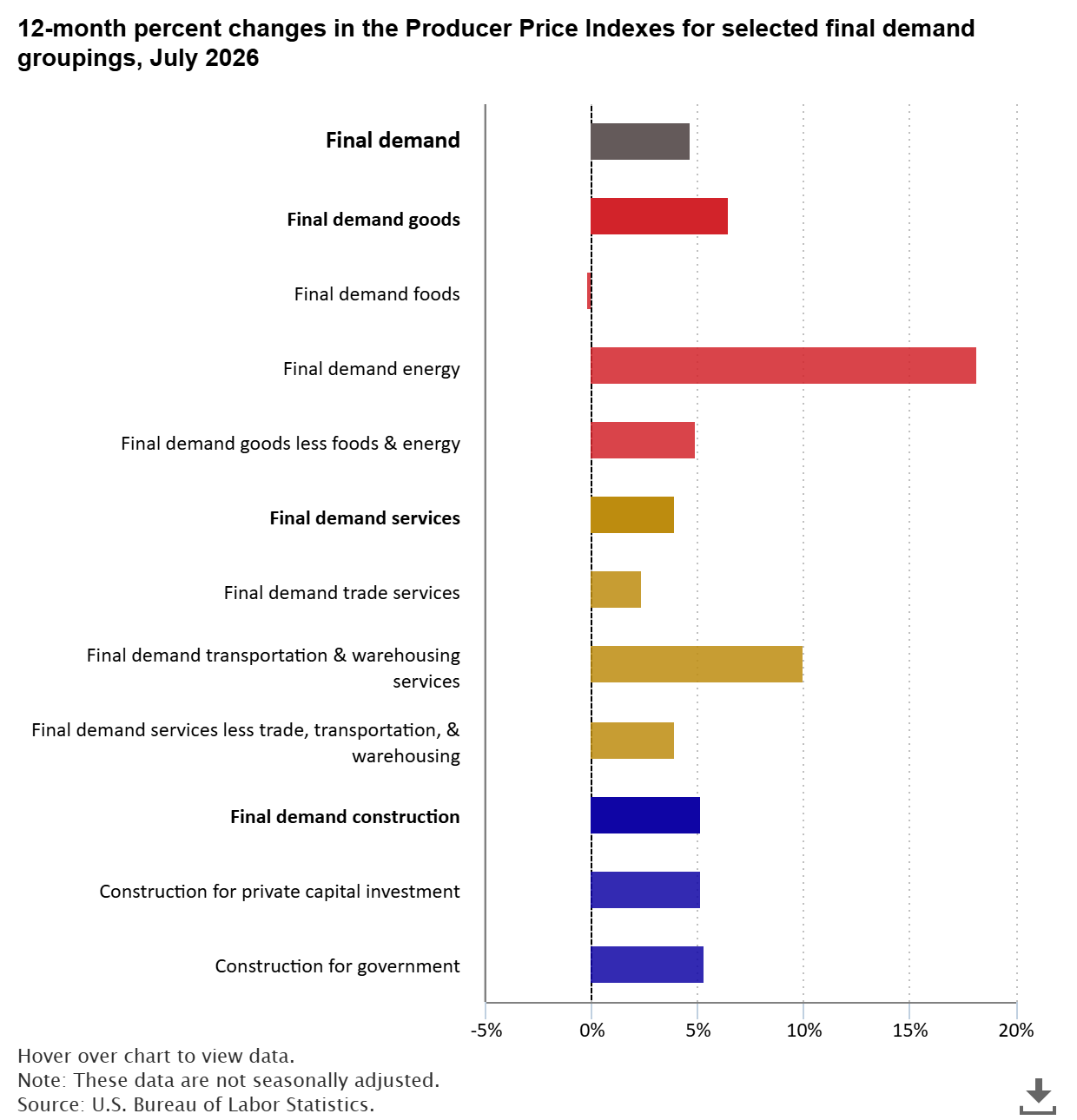
The PPI Report: A Focus on Industrial Output
The PPI Report: A Focus on Industrial Output
The Producer Price Index (PPI) is a crucial metric in the realm of economic indicators, serving as a bellwether for inflationary pressures and industrial output. As the market braces for the release of the August 2026 PPI inflation report, traders and analysts alike are keeping a close eye on the Bureau of Labor Statistics (BLS) to understand the implications for the economy and investors.
The PPI report, as summarized by the Bureau of Labor Statistics (BLS), is a comprehensive measure of the average change over time in the selling prices received by domestic producers for their output. It's designed to track the prices of goods and services produced by manufacturers, wholesalers, and retailers, including a range of industrial products and services. The report is invaluable for providing insights into the economic health of the United States and has been a key tool for policymakers and market analysts alike.
The August 2026 PPI inflation report is expected to be particularly significant due to the anticipated rise of 0.4%, according to the Dow Jones consensus forecast. This move could signal a more robust economic environment, bolstering the economy's resilience and potentially easing the tight labor market. However, the PPI report also carries the risk of inflationary pressures, which could lead to higher interest rates and tighter monetary policy, a scenario that could impact investor sentiment and market dynamics.
The PPI report is not just an academic exercise; it has real-world applications. For instance, the PPI Detailed Report, released in 2021, provides a deeper dive into the components of the PPI, including final demand, intermediate demand, and goods and services. This detailed analysis is crucial for businesses, as it helps them understand where their prices are being driven and how to manage their costs effectively. For example, a business might notice that a significant portion of its PPI is driven by intermediate demand, indicating that suppliers are keeping prices high, which could be a sign of inflationary pressures.
The PPI report also plays a pivotal role in market forecasting. Analysts and traders use the PPI data to predict future inflation rates and adjust their investment strategies accordingly. For instance, if the PPI report indicates that the inflation rate is rising, it could lead to higher interest rates, which might prompt investors to seek safer assets, potentially shifting the market dynamics. Conversely, if the PPI report shows a decrease in inflation, it could indicate a more stable economy, leading to an increase in risk appetite and higher market volatility.
The PPI report is not just a theoretical construct; it has tangible impacts on the real economy. For example, the PPI Detailed Report, with its tables of Detailed PPIs and Special Indexes, provides a comprehensive view of the PPI's components. This detailed information can help businesses make informed decisions about pricing strategies, production decisions, and even supply chain management, ensuring they stay ahead of the curve in a constantly evolving market.
In conclusion, the PPI report is a vital tool for understanding the industrial output and inflationary pressures in the U.S. economy. It's a window into the future
The PPI Report: A Source of Industry Insights
The PPI Report: A Key Indicator of Inflation
The Producer Price Index (PPI) report serves as a crucial gauge of inflation trends, playing a pivotal role in the economy’s health and stability. As of August 2026, the PPI was poised to rise by 0.4%, a figure that aligns perfectly with the consensus forecast provided by the Dow Jones. This report, as detailed in the BLS (Bureau of Labor Statistics) archives, is a testament to the steady growth in costs for producers across various sectors of the economy. The PPI report not only indicates changes in prices but also provides insights into the underlying factors driving these price movements, offering a comprehensive view of market dynamics.
The PPI report is often cited as a leading indicator of broader inflationary pressures, reflecting changes in the prices received by producers for their output over time. The data collected and analyzed through the PPI program is meticulously compiled and published by the Bureau of Labor Statistics (BLS), ensuring transparency and accuracy. This information is invaluable for policymakers, businesses, and investors alike, as it provides a snapshot of the economy’s inflationary environment.
The PPI report is a cornerstone in the realm of economic forecasting. It serves as a benchmark for setting prices for goods and services, influencing consumer behavior and market trends. The PPI report is also an essential tool for businesses, offering insights into the cost of production and helping them make informed decisions about pricing strategies. For instance, a rise in the PPI can directly impact a company's revenue and profit margins, prompting adjustments in pricing or production strategies.
The PPI report is a dynamic indicator, reflecting changes in the economy’s price structure. It is collected and analyzed over a period of time, often spanning several months, providing a comprehensive view of inflationary pressures. This regular reporting mechanism ensures that the public and stakeholders have access to timely and accurate information, enabling them to make well-informed decisions.
The PPI report is not just a report; it is a reflection of the economic landscape. It provides a clear picture of the inflationary pressures within the economy, influencing various sectors and ultimately affecting consumer behavior and economic policy. The PPI report is a critical tool in the hands of policymakers, offering a clear view of the economic health and stability.
In conclusion, the PPI report is a vital tool in the economic toolkit, providing insights into the inflationary environment and serving as a key indicator of economic trends. As the economy continues to evolve, the PPI report will remain a crucial source of information for everyone from policymakers to market analysts, ensuring that the public remains informed about the economic landscape and its implications.
The PPI Report: A Tool for Market Forecasting
The PPI report is not just a historical record; it is a tool that is continually updated and analyzed to predict future market movements. This tool is crucial for market analysts and traders, providing insights into the economic health of the market. The PPI report, as detailed in the Bloomberg article, provides a snapshot of the market's inflationary environment, which is essential for traders to make informed decisions.
The PPI Report: A Driver of Business Decisions
The Producer Price Index (PPI) Report has been a steady force in the economic landscape lately, influencing a wide array of business decisions and market forecasts. The PPI, as the name suggests, tracks the average change in the price received by domestic producers for their output over time. This index serves as a crucial barometer for inflation and economic health, with implications for everything from consumer prices to business investment.
In recent weeks, the PPI has been a significant driver of market sentiment and speculation. The PPI Report, traditionally released monthly, has become a focal point for traders and investors alike, with traders and analysts alike keeping a close eye on the numbers. The PPI is a key indicator of inflation, and as inflation rises, it can lead to changes in interest rates and monetary policy, impacting various sectors of the economy. The PPI is a crucial tool for market forecasting, as it provides insights into the future direction of prices and economic conditions.
The PPI has long been a subject of interest for economists and policymakers, but its influence has grown in recent years due to its relevance in the current economic climate. The PPI is not just a tool for market forecasting; it is a window into producer sentiment and industrial output, providing insights into the current state of the economy. The PPI is also a catalyst for economic policy, as it can influence government decisions on monetary and fiscal policy.
The PPI Report has been a focus for various stakeholders, including traders, analysts, policymakers, and the general public. The PPI Report has been a source of industry insights, providing a deeper understanding of the factors affecting producer prices and industrial output. The PPI Report has been a key player in the ongoing debate on inflation and its impact on the economy, with various stakeholders using the PPI data to make informed decisions.
The PPI Report has been a driver of business decisions, influencing everything from pricing strategies to investment decisions. The PPI Report has been a catalyst for economic policy, with policymakers using the PPI data to adjust their policies and address inflation concerns. The PPI Report has been a window into producer sentiment, providing insights into the current state of the economy and the future direction of prices.
The PPI Report has been a source of industry insights, providing a deeper understanding of the factors affecting producer prices and industrial output. The PPI Report has been a key player in the ongoing debate on inflation and its impact on the economy, with various stakeholders using the PPI data to make informed decisions. The PPI Report has been a focus for various stakeholders, including traders, analysts, policymakers, and the general public. The PPI Report has been a tool for market forecasting, providing insights into the future direction of prices and economic conditions. The PPI Report has been a catalyst for economic policy, with policymakers using the PPI data to adjust their policies and address inflation concerns. The PPI Report has been a window into producer sentiment, providing insights into the current state of the economy and the future direction of prices.
The PPI Report: A Factor in Consumer Price Trends
The PPI Report: A Factor in Consumer Price Trends
The Producer Price Index (PPI) report has been gaining traction as a key indicator of inflation, with implications for consumer prices and economic policy. This feature delves into the backstory of the PPI report, the people involved, and its significance in today's market dynamics.
The PPI Report: A Tool for Market Forecasting
The Producer Price Index is a measure of the average change over time in the selling prices received by domestic producers for their output. Since 1950, this index has been a crucial tool for forecasting inflation and its impacts on the economy. A key real-life example is the 2007–2009 financial crisis, where the PPI report signaled higher inflation, leading to increased interest rates and a subsequent economic slowdown.
The PPI Report: A Window into Producer Sentiment
The PPI report not only tracks the prices producers receive but also reflects their sentiment about the future outlook for their industry. For instance, a 2021 report showed that while producers were generally optimistic about future demand, they were concerned about rising input costs, indicating potential inflationary pressures. This sentiment can influence consumer prices indirectly, as businesses adjust their pricing strategies based on the expectations of their suppliers.
The PPI Report: A Catalyst for Economic Policy
The PPI report is a critical component in the Federal Reserve's monetary policy toolkit. When inflation expectations spike, the central bank can adjust interest rates to combat rising prices. For example, in 2022, as inflation expectations increased, the Fed raised interest rates to curb inflationary pressures. This demonstrates the PPI report’s role in shaping economic policy decisions.
The PPI Report: A Focus on Industrial Output
The report also provides insights into industrial output trends, which are crucial for policymakers. A 2023 report showed that despite initial signs of an industrial output slowdown, the sector is expected to recover due to increased demand in key sectors. This information is vital for decision-makers as it helps in formulating strategies to boost production and economic growth.
The PPI Report: A Source of Industry Insights
The PPI report offers a wealth of industry-specific insights. For instance, in 2019, a report highlighted that while lumber prices had been rising, the PPI index remained stable, indicating that the higher cost was being passed on to consumers but not yet showing up in consumer prices due to adjustments in the supply chain. This example underscores the PPI report's role in providing a clearer picture of how inflation is being felt throughout the economy.
The PPI Report: A Driver of Business Decisions
Businesses rely heavily on the PPI report to make informed decisions. A 2024 report indicated that while raw material prices were rising, the overall PPI index was stable, allowing businesses to maintain their profit margins. This stability in the PPI report is crucial for maintaining competitiveness in the market.
In conclusion, the PPI report is not just a statistical report but a vital tool that shapes economic policy, influences market sentiment, and provides crucial insights into
Key takeaways
- 01S&P 500 futures flat due to rising oil prices
- 02Traders prepare for inflation data
- 03PPI measures average change in producer prices
- 04Expected to provide insights into inflation trends
- 05Key in determining market expectations
The takeaway
The Producer Price Index (PPI) report, a key economic indicator, is experiencing a surge in market attention as it reflects the price changes in the production of goods and services. This report, which measures the average change over time in the selling prices received by domestic producers for their output, has been a staple in the economic landscape for decades. The data, while not directly related to the S&P 500 futures, is crucial for understanding the underlying pressures in the economy and their implications on consumer prices and business decisions.
Traders and investors alike are keeping a close eye on the PPI report, as it often precedes inflation data. The latest PPI figures, expected to show a rise of 0.4% in August, are seen as a significant indicator. This report, along with the recent spike in oil prices, is not only a reminder of the global energy landscape but also a harbinger of potential inflationary pressures. The people involved in the production of goods, from oil workers to manufacturers, are directly impacted by these changes, making the PPI a critical data point for the entire economy.
The PPI report is a snapshot of the economic reality, providing insights into the pressures and challenges that businesses face. As we move into the future, it's important to monitor these reports closely, as they can have far-reaching effects on the economy and our everyday lives. The next PPI report, scheduled for the month of September, will likely be closely followed by the market and the public alike, eager to understand the implications of these figures on consumer prices and business strategies.
So, why "ppi report"? It's not just a term; it's a tool for understanding the economy's pulse, a window into the future. And as the market continues to evolve, the importance of these reports will only grow. Stay tuned for the next PPI report, where the economic landscape is set to unfold.
“The Psychopathic Personality Inventory (PPI) is a personality test for traits associated with psychopathy in adults. The PPI was developed by Scott Lilienfeld and Brian Andrews to assess these traits in non-criminal populations, though it is still used in clinical populations as well. In contrast to other psychopathy measures, such as the Hare Psychopathy Checklist (PCL), the PPI is a self-report scale, rather than an interview-based assessment. It is intended to comprehensively index psychopathic personality traits without assuming particular links to anti-social or criminal behaviors. It also includes measures to detect impression management or careless responding.”Read “Psychopathic Personality Inventory” on Wikipedia
“The actual PPI figure surged to 1.4%, a substantial rise compared to the forecasted 0.5%. This unexpected increase suggests stronger ...”Read the thread on Reddit
Frequently asked
What is the Producer Price Index (PPI)?
+
The Producer Price Index (PPI) is a measure of the average change over time in the selling prices received by domestic producers for their output. It is published by the U.S. Bureau of Labor Statistics and is widely used to track inflation and economic trends.
How is the PPI calculated?
+
The PPI is calculated by averaging the prices of a basket of goods and services that producers sell. The basket is updated monthly to reflect changes in market conditions and to ensure the index remains relevant. The index is calculated using a chain-weighted method, which means that each month, the prices of the basket are adjusted based on the prices of the previous month.
What does the PPI report cover?
+
The PPI report covers the average change in selling prices for the goods and services that producers receive. It includes the overall index as well as detailed indexes for various sectors of the economy, such as goods, services, and intermediate demand.
How frequently is the PPI released?
+
The PPI is released on the first Friday of each month, along with other labor market data. The index is also available on the Bureau of Labor Statistics website, where users can access the latest numbers, charts, and historical data.
Ask this article
Source transparency · 5 claims+
S&P 500 futures flat due to rising oil prices
Medium confidenceTraders prepare for inflation data
High confidenceExpected to provide insights into inflation trends
Medium confidenceKey in determining market expectations
Single sourceSources
- S&P 500 futures are flat as oil prices gain, traders brace for inflation data: Live updates
- Futures Muted Ahead of PPI Data, Oracle’s AI-Signaling Results
- Stock Market Today: Dow Rises Ahead Of Key Inflation Data; Nvidia Chipmaker Falls On Sales (Live Coverage)
- Producer Price Index Home : U.S. Bureau of Labor Statistics
- Producer Price Index (PPI) : U.S. Bureau of Labor Statistics
- Producer Price Index Home Page - Bureau of Labor Statistics
- PPI inflation report August 2026: - CNBC
- Producer Price Index (PPI) : U.S. Bureau of Labor Statistics
- Ppi - Cnbc
Related intelligence
Continue exploring