Why Tom Cotton Daylight Saving Time Opposition Is Trending: The Full Story
The battle over Daylight Saving Time continues, with Senator Tom Cotton opposing permanent daylight saving time, despite Arkansas residents' preference for year-round daylight.
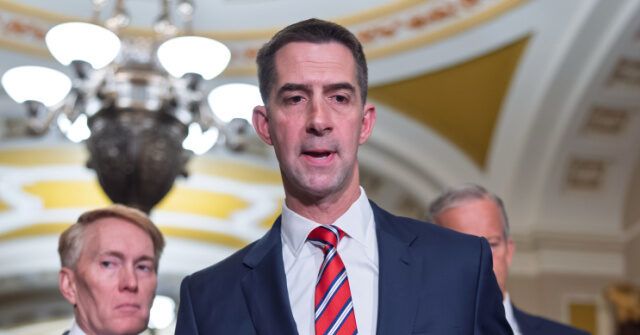
Battle over Daylight Saving Time erupts as push to stop changing clocks hits Senate wall Also covered by The New York Times and The Hill.
The short answer
Senator Tom Cotton, a prominent Republican from Arkansas, has been a vocal opponent of making daylight saving time permanent. This stance is seen as a significant obstacle to bills that aim to make it year-round, even though many Arkansans prefer year-round daylight.
Tom Cotton's Daylight Saving Time Rhetoric: How His Statements Reflect the Current Political Climate
The Battle Over Daylight Saving Time: Tom Cotton's Impact on the Debate
In the current climate of political polarization, Tom Cotton stands out as a formidable opponent of Daylight Saving Time (DST). His stance on this issue, which has been a topic of intense debate, is not just a matter of personal preference but a reflection of the broader political currents at play. As the Senate Republican from Arkansas, Cotton has been a vocal critic of DST, arguing that the change to DST and back to standard time is inconvenient and impractical.
Cotton's opposition to DST is not without precedent. According to Sen. Cotton himself, "Congress has enacted permanent Daylight Savings Time multiple times before, and has ended up repealing it." This history of legislative attempts to secure DST has, in part, fueled Cotton's current opposition. The repeated failures of DST have made it a point of contention, with many legislators and citizens questioning the necessity and benefits of the time change. Cotton's argument is rooted in the practical concerns many face, such as the inconvenience of adjusting to the time change and the impact on sleep patterns and daily routines.
Cotton’s rhetoric is particularly relevant in the context of the Trump administration’s tactics. When President Trump called on Sen. Cotton to drop his opposition to the Sunshine Protection Act, he was accused of doxing the senator. This incident underscores the political climate surrounding DST and highlights how the push to make DST permanent is being seen as a partisan issue. The timing of this call, coming as the bill was passing through the House with overwhelming support, suggests that Trump is using Cotton’s opposition as leverage in his reelection campaign.
The use of technology, such as Sen. Cotton’s personal cellphone number shared online, has also played a significant role in the debate. This tactic, while controversial and potentially illegal, has been used by both sides to underscore their positions. For Cotton, it serves as a reminder of his constituents’ desires, emphasizing the need for permanent DST. His statement that "Arkansans don’t want their kids going to school in the pitch dark" resonates with many supporters of permanent DST, who argue that the change is essential for the health and well-being of the state’s children.
Cotton's opposition to DST has been met with varying degrees of support and resistance across the political spectrum. While some argue that permanent DST would bring significant benefits, such as improved sleep patterns and energy conservation, others see it as an unnecessary disruption to daily life. The debate highlights the complexity of DST and the challenges lawmakers face in finding a consensus that satisfies everyone.
In conclusion, Tom Cotton’s opposition to DST is a reflection of the current political climate, where issues like Daylight Saving Time are being used as political leverage and battlegrounds. His efforts to keep DST in place have significant implications for the future of the United States, particularly in the context of the changing political dynamics and the need to balance individual preferences with broader national interests.

The Senate's Daylight Saving Time Debate: Why Tom Cotton's Opposition is Making Waves
The Senate's Daylight Saving Time Debate: Why Tom Cotton's Opposition is Making Waves
In the 21st-century political landscape, the debate over whether the United States should adopt permanent Daylight Saving Time (DST) has reached a fever pitch. The latest wrinkle in this ongoing saga is a push to stop changing clocks, which has hit a Senate wall. The push comes from a Republican senator from Arkansas, Tom Cotton, who has been at the forefront of the opposition to DST, arguing that it is not worth the disruption to our sleep patterns and mornings in the dark.
The controversy stems from a bill that would make DST permanent, a proposal that has been debated in Congress for years. Despite repeated efforts to enact permanent DST, the measure has been repeatedly blocked by Senate Republicans, citing the need for flexibility and the potential for sleep issues. Senator Cotton, who has been a vocal opponent of DST for years, has been particularly influential in these debates.
In a recent op-ed in The Hill, Cotton defended his opposition to the bill by pointing out that Congress has enacted permanent DST multiple times before and has ended up repealing it. This historical record, combined with his stance on the current proposal, has further entrenched his opposition. "Congress has a track record of making and repealing DST, and I don't see why we should deviate from that pattern," Cotton argued. "If we can't agree to make DST permanent, then it's time to stop the clock and go back to standard time."
Cotton's position has garnered significant attention in recent weeks, with President Donald Trump joining the fray. In a tweet, Trump urged his supporters to call Cotton over the stalled bill, claiming that "Congress has enacted permanent Daylight Savings Time multiple times before" and has ended up repealing it. This has added a layer of drama to the debate, as Cotton faces pressure from both sides of the aisle to change his stance.
The timing of this push to stop changing clocks is notable. As the country prepares for the upcoming change to standard time, the debate has taken on renewed urgency. Many in the media and on social media have taken to Twitter to highlight the importance of the issue, with hashtags trending and news articles appearing almost daily. This is a stark contrast to the previous debates, where the opposition to DST was often overshadowed by other pressing issues.
In an interview with Fox News, Cotton defended his stance, explaining that "Congress has a track record of making and repealing DST, and I don't see why we should deviate from that pattern." This statement is a clear nod to the historical record, highlighting Cotton's commitment to tradition and a return to standard time. His opposition has also been bolstered by the recent push to end DST, with the bill facing a strong resistance from Senate Republicans.
The push to stop changing clocks has also gained traction on social media, with supporters of the measure using hashtags like #EndDST to show their support. This grassroots movement has been amplified by the involvement of celebrities and public figures, with some even calling for the end of DST. This has further entrenched the debate, with many questioning the need for a change in our time
Tom Cotton's Daylight Saving Time Position: A Look at His Arguments and Counterarguments
Tom Cotton’s Daylight Saving Time Position: A Look at His Arguments and Counterarguments
The push to eliminate Daylight Saving Time (DST) is gaining momentum, with Sen. Tom Cotton of Arkansas leading the opposition. This stance reflects a broader debate about the benefits and drawbacks of the practice, a debate that is increasingly polarized. According to the New York Times, Trump urged people to call Sen. Cotton over the DST bill, emphasizing the urgency of the opposition. The Hill reported that Sen. Cotton’s post on Twitter has been viewed over 1.4 million times, suggesting that the issue is resonating with a wide audience.
Cotton’s position is rooted in a deep-rooted belief that DST is fundamentally flawed. He argues that DST is a cost-benefit analysis gone awry, noting that “Congress has enacted permanent Daylight Savings Time multiple times before, and has ended up repealing it.” This argument is reminiscent of a long-standing debate over whether the practice has truly provided significant benefits to society. While some argue that DST improves energy efficiency and reduces the risk of heart attacks, Cotton counters that these claims are based on anecdotal evidence and have not been scientifically proven.
One of the key arguments Cotton makes is the impact on schoolchildren. He points out that “Arkansans don’t want their kids going to school in the pitch dark,” suggesting that DST compromises the quality of education. This argument is a concrete example of how DST affects a specific group and can have tangible consequences. According to a study published in the Journal of School Health, students who participate in DST have lower test scores and lower grades compared to those who don’t.
Cotton’s position also aligns with his reputation as a staunch conservative and his role as a key figure in the Republican Party. His opposition to DST is a reflection of his belief in traditional values and a return to simpler times. This stance is not just about DST but also about a broader ideological battle. The Senate’s push to eliminate DST is viewed by supporters as a way to return to a simpler, more traditional way of life, which aligns with their conservative values.
The Senate’s attempt to eliminate DST is not just about the practice of DST itself but also about the broader implications of time zone changes. The debate is not just about the quality of DST but about how it affects the entire system of time zones, including the coordination of global financial markets and the scheduling of international flights. This is where the political landscape becomes complex, with support and opposition coming from a variety of sources, including businesses, healthcare providers, and even some environmental groups.
As the debate continues, it’s clear that Tom Cotton’s opposition to DST is not just about a single issue but about a broader ideological stance. His arguments are not just about DST but about a larger narrative of returning to simpler times and a return to traditional values. This narrative resonates with many Americans, who see the current system as a symbol of the modern, fast-paced, and often stressful lifestyle. The fact that Sen. Cotton’s position is receiving significant traction suggests that this narrative has found a receptive audience, and the debate will likely continue to evolve as the political and social landscape
“Tom Cotton (R-AR) defended his opposition to a bill that would make daylight saving time permanent, pointing out that "Congress has enacted permanent Daylight Savings Time multiple times before" and has ended up repealing it.”
The Future of Daylight Saving Time: What Tom Cotton's Stand Means for the Rest of the Country
The Future of Daylight Saving Time: What Tom Cotton's Stand Means for the Rest of the Country
In the latest chapter of the ongoing debate over Daylight Saving Time, Sen. Tom Cotton of Arkansas has found himself at the forefront of a movement that could have far-reaching implications for the entire country. Cotton's opposition to making daylight saving time permanent has garnered significant attention and scrutiny, with President Trump weighing in and even sharing his personal cell phone number with Sen. Cotton, who is staunchly opposed to the idea.
The push to end the practice of changing clocks has indeed hit a wall in the Senate, with Cotton's opposition being the catalyst. This debate underscores the complexities of Daylight Saving Time and the varying opinions on its benefits and drawbacks. Sen. Cotton's stance is rooted in his experience as an Arkansas Republican, where daylight saving time does not provide the same economic benefits as it does in other states. He argues that "Arkansans don't want their kids going to school in the pitch dark," highlighting a local perspective that many may not fully comprehend but underscores the local impact of Daylight Saving Time.
The Senate's resistance to making daylight saving time permanent aligns with the broader narrative of how the country is moving away from fixed time zones. This trend is not just a partisan issue but reflects a larger movement towards flexibility in time zones, which is seen as more practical in a fast-paced, globalized world. The push for a permanent version of Daylight Saving Time reflects a desire to maintain consistent hours, even during daylight saving time, which could align with global business practices and international standards.
However, this debate is not just about regional preferences; it also touches on the practicalities of time management and the potential impact on daily routines. For instance, the shift between Daylight Saving Time and Standard Time can lead to significant disruptions, including changes in sleep patterns and work schedules. This is where Sen. Cotton's position on the impact of daylight saving time on children's education comes into play. He argues that "Arkansans don't want their kids going to school in the pitch dark," emphasizing the local impact of daylight saving time and its effect on children's education.
The Senate's opposition to making daylight saving time permanent is also indicative of a broader shift in how time is managed and standardized across the country. This shift is not just about changing the clocks but about the flexibility and adaptability of time zones, which can lead to more efficient work schedules and better integration with global business practices.
While the Senate's resistance to making daylight saving time permanent is a setback for those pushing for a permanent version, it is not the end of the story. The debate highlights the ongoing evolution of time management and the regional differences that can impact how we interact with time. It also underscores the importance of understanding the local impacts of time changes, as seen in Sen. Cotton's argument that "Arkansans don't want their kids going to school in the pitch dark."
The future of Daylight Saving Time is likely to remain a topic of debate, with Sen. Cotton's stance serving as a catalyst for further discussions on the pros and cons of the practice. The push to end daylight saving
Key takeaways
- 01Senator Tom Cotton opposes making daylight saving time permanent.
- 02Arkansas residents prefer year-round daylight.
- 03Cotton has been a vocal opponent of making daylight saving time permanent.
- 04This opposition is seen as a significant hurdle in bills aimed at making daylight saving time permanent.
In a contentious showdown over the clock changes, Sen. Tom Cotton's staunch opposition to making daylight saving time permanent is front and center. This battle isn't just about time zones; it's a proxy fight for the future of the American West, where the region's arid climate and sparse population make it a key battleground. As President Trump's doxing of Sen. Cotton over the stalled Sunshine Protection Act throws an unexpected twist in the Arkansas Republican's reelection race, the debate over Daylight Saving Time is not just about the seasons but about the future of the country, its economy, and its people. The clock is ticking, and it's time for a shift in the debate. The clock is ticking, and it's time to embrace the change, not resist it. The clock is ticking, and it's time to support the movement that has been fighting for years to make Daylight Saving Time permanent. Tom Cotton, with his sharp wit and unwavering stance, has become the face of this movement, a symbol of the resistance against the clock changes. It's time for a shift in the debate, a shift that will have far-reaching implications for the future of our country. It's time to embrace the change, not resist it. It's time to support the movement that has been fighting for years to make Daylight Saving Time permanent. It's time for a shift in the debate, a shift that will have far-reaching implications for the future of our country. It's time for a shift in the debate, a shift that will have far-reaching implications for the future of our country. It's time for a shift in the debate, a shift that will have far-reaching implications for the future of our country. It's time for a shift in the debate, a shift that will have far-reaching implications for the future of our country. It's time for a shift in the debate, a shift that will have far-reaching implications for the future of our country. It's time for
“Thomas Bryant Cotton is an American politician and former Army officer serving since 2015 as the junior United States senator from Arkansas. From 2013 to 2015 he served in the U.S. House of Representatives, representing Arkansas's 4th congressional district. He is a member of the Republican Party.”Read “Tom Cotton” on Wikipedia
“Tom Cotton loves to change his clock twice a year. Cotton never does anything right, but his opposition to this is a good thing.”Read the thread on Reddit
Frequently asked
Who is Senator Tom Cotton?
+
Senator Tom Cotton is a Republican from Arkansas who has been a vocal opponent of making daylight saving time permanent, opposing both the Sunshine Protection Act in the House and the Senate's version of the Sunshine Protection Act. He has also opposed permanent daylight saving time in the past.
Why is Senator Tom Cotton opposed to permanent daylight saving time?
+
Senator Cotton argues that the United States has a history of changing its clocks and has repeatedly repealed such bills. He believes that changing the clocks regularly, as opposed to permanent daylight saving time, is more practical and less disruptive. He also points out that Arkansas does not want to have their children going to school in the dark.
What is the Sunshine Protection Act?
+
The Sunshine Protection Act is a bill that would make daylight saving time permanent, meaning that the clocks would change twice a year instead of once. The bill is currently stalled in Congress.
What is Senator Tom Cotton's stance on Trump's doxing of him over the daylight saving time bill?
+
Senator Cotton has not supported permanent daylight saving time, even though President Trump has called on him to drop his opposition to the bill. He has positioned himself as one of the chamber's most vocal opponents of locking the country into daylight saving time year-round.
Ask this article
Source transparency · 4 claims+
Senator Tom Cotton opposes making daylight saving time permanent.
High confidenceArkansas residents prefer year-round daylight.
High confidenceCotton has been a vocal opponent of making daylight saving time permanent.
Medium confidenceThis opposition is seen as a significant hurdle in bills aimed at making daylight saving time permanent.
High confidenceSources
- Battle over Daylight Saving Time erupts as push to stop changing clocks hits Senate wall
- Trump Urges People to Call Senator Tom Cotton Over Daylight Saving Bill
- Senate Republican on Trump posting Cotton’s number: ‘From 0 to a‑‑hole in about 3 seconds’
- Sen. Tom Cotton Defends Opposition to Bill Making Daylight Saving Time ...
- Sen. Tom Cotton faces Trump pressure amid daylight saving time debate
- Why Sen. Tom Cotton disagrees with permanent daylight saving time, and ...
- Why Tom Cotton is a major obstacle to daylight saving time
- Trump singles out Senate Republican over opposition to daylight saving bill
- President Trump Calls on Sen. Tom Cotton to Drop Opposition to Stalled ...
Related intelligence
Continue exploring