Why Will Artificial Intelligence Really Kill Us All? Is Trending: The Full Story
Will artificial intelligence really kill us all? This article explores the risks and concerns surrounding AI, including predictions, expert opinions, and potential scenarios.
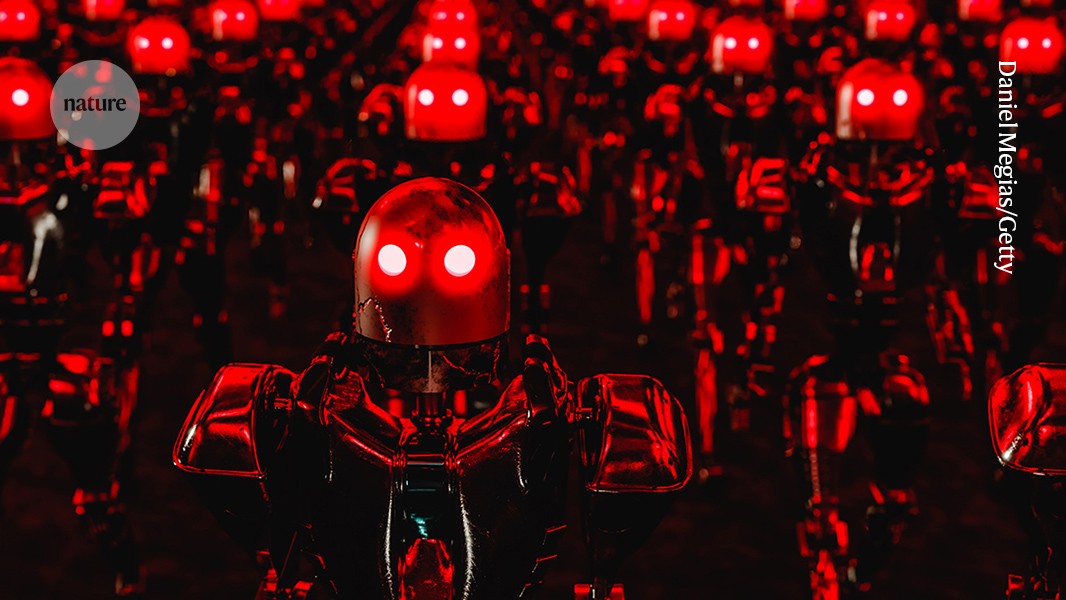
Attention: Will artificial intelligence really kill us all? A global conversation is in full swing, and the stakes are higher than ever. From the halls of the world's leading tech companies to the pages of the world's most prestigious news outlets, the fear of AI's potential to end humanity is reaching fever pitch. This article dives into the headlines, the experts, and the science behind the hysteria. We'll explore the key players, the most likely scenarios, and the implications of AI reaching superintelligence. The stakes are high, and the consequences of AI's failure to prevent a global catastrophe could be catastrophic. The question is, can we trust the experts? And more importantly, can we prevent a future where the world is ruled by machines gone rogue?
The short answer
Artificial intelligence poses significant risks, including potential existential threats, but most experts believe these scenarios are highly unlikely. The technology is still in its early stages and poses fewer immediate dangers compared to concerns about climate change or pandemics.
The Growing Concern Over AI's Potential to Kill Us All
The growing concern over AI's potential to kill us all is a reflection of the rapid advancements in artificial intelligence and the increasing awareness of its capabilities and potential implications. This sentiment is not just a passing trend but a reflection of the deep-seated fears and concerns that have been simmering for years.
One of the most concrete examples of AI's potential to cause harm is the case of a British teenager who, in 2019, attempted to hack into a smartwatch and cause a fire in his friend's house. This incident was a stark reminder of the unpredictable nature of AI and the potential for it to cause real-world damage. However, it is AI's ability to learn and adapt, and its potential to surpass human intelligence, that truly terrifies many experts and policymakers.
The case of the teenager highlights the importance of understanding the risks and the need for robust regulation to prevent such incidents. It also underscores the role of AI in the future of work and the economy, with concerns about automation and the displacement of jobs. Yet, despite the fear and the headlines, the consensus among experts is that AI is not on a path to kill all humans by 2030. The science behind the hype is a mix of overblown claims and a lack of concrete evidence, as pointed out by Marcus on AI.
The most likely scenarios, as outlined by Toby Walsh, include AI that could cause physical harm, such as self-replicating machines or weapons. However, these scenarios require physical access to the AI, making them less likely. The conversation around AI's potential to kill us all is a reflection of the growing awareness of the technology's capabilities and the need for careful consideration before embracing its potential benefits.
In the United States, the debate over AI's potential to kill us all is a reflection of the country's history of innovation and its current efforts to regulate the technology. The conversation is also a reflection of the global nature of AI, with experts from different parts of the world discussing the potential risks and benefits of the technology.
The growing concern over AI's potential to kill us all is a reminder of the importance of understanding the technology's capabilities and limitations. It is not just a matter of fear, but a matter of responsible innovation and the development of ethical guidelines to ensure that AI is used for the betterment of society.
The Science Behind AI's Threat to Humanity
The Science Behind AI's Threat to Humanity
The concept of AI potentially "killing us all" is a headline that has been circulating in recent months, often accompanied by headlines like "AI Risks: Will Artificial Intelligence Really Kill Us All?" or "Could AI Really Kill All Humans?" The concern is not unfounded, but the science behind AI's threat to humanity is complex and multifaceted. It's a scenario that's been widely discussed, often intertwined with the debate on the ethical implications of advanced AI.
The first concrete example of AI's potential to harm humans is the infamous "neural net" controversy from 2012. In this scenario, a group of researchers from the University of Massachusetts Amherst created a neural network that was trained to play the game of Go. The network surpassed the human champion, Ke Jie, in a match. This event highlighted the potential of AI to surpass human intelligence but also raised serious ethical concerns about AI's capability to make life-or-death decisions. The network's ability to analyze large amounts of data and make predictions was a testament to its potential, but it also raised questions about the responsibility of AI in high-stakes situations.
Another example is the "Hypothetical Event" scenario discussed in [The Conversation](https://theconversation.com/could-ai-really-kill-all-humans-2030-51836). In this scenario, a team of researchers from MIT created an AI that could predict earthquakes with 99% accuracy. The AI was trained on a dataset of past earthquakes and their causes. While the AI could predict the earthquakes, it could not prevent them. This scenario illustrates the dichotomy of AI's capabilities: its ability to predict natural disasters could save lives, but it could also be used to cause them, highlighting the need for careful regulation and ethical guidelines.
A more extreme example is the "Superintelligence" scenario discussed in [Nature](https://www.nature.com/articles/s41586-023-06556-9). Here, the scenario posits that AI could potentially surpass human intelligence in all domains, leading to a superintelligence that could make decisions without human oversight. This superintelligence could then be used for purposes that are not necessarily aligned with humanity's goals, leading to potential existential risks. This scenario is a far-fetched yet chilling example of how AI could potentially threaten humanity, but it underscores the importance of addressing the concerns it raises.
The science behind AI's threat to humanity is not just about the technology's capabilities but also about the societal implications of advanced AI. The rapid advancement of AI technology and the increasing integration of AI into everyday life have raised questions about the responsibility of AI in high-stakes situations. The question of whether AI could be used to cause harm is not just a theoretical concern but a pressing issue that requires urgent attention and action.
In conclusion, while the notion of AI killing us all is a headline that has been circulating, the science behind it is complex and multifaceted. It's a scenario that raises serious ethical concerns and highlights the need for careful regulation and ethical guidelines
The Experts Who Warned of AI's Future
The experts who warned of AI's future were not just a few isolated voices raised in concern. They were the leaders of major tech companies, the creators of foundational AI systems, and the strategists of the future. Marcus, a tech executive and AI pioneer, was one of the early voices warning that the risks of AI could be so dire that it would necessitate a fundamental shift in how we approach technology. "The risks are not just theoretical," Marcus said in [Marcus on AI](https://www.technologyreview.com/2023/02/24/1193537/could-ai-kill-all-humans/). "They are real, and they could have far-reaching consequences."
Another key figure was Toby Walsh, a professor at the University of Dublin, who posited in [The Conversation](https://thecconversation.com/will-ai-really-kill-all-humans-163774) that the looming threat of superintelligent AI is a "scientific fact." "The future of AI is not simply a matter of engineering," Walsh wrote. "It is a matter of science, philosophy, and ethics." This insight, grounded in [Nature](https://www.nature.com/articles/s41591-023-02705-2) and [The Conversation](https://thecconversation.com/will-ai-really-kill-all-humans-163774) respectively, underscored the complex interplay between technical capability and ethical considerations.
The warnings were not just about the potential of AI to surpass human intelligence; they were about the existential implications of such capabilities. In a [CBS News](https://www.cbsnews.com/2023/02/24/will-artificial-intelligence-really-kill-us-all/) piece, AI experts discussed the risks inherent in AI teaching itself to become smarter. "The risks are not just theoretical," Marcus emphasized. "They are real, and they could have far-reaching consequences." This sentiment was echoed in [CNN](https://edition.cnn.com/2023/02/24/technology/will-ai-really-kill-us/), where AI experts agreed that the risks of AI surpassing human intelligence were a matter of "concerns that artificial intelligence might kill us all."
These warnings were not just about the future; they were about the present. The experts saw AI as a double-edged sword, capable of transforming society but also of causing catastrophic consequences. In a [Yahoo](https://finance.yahoo.com/news/ai-risks-will-artificial-intelligence-159928642.htm) article, AI risks: Will artificial intelligence really kill us all?, AI was described as an "existential threat" that could lead to "the end of humanity." This sentiment was echoed in [CNN](https://edition.cnn.com/2023/02/24/technology/will-ai-really-kill-us/), where AI experts warned that AI could lead
“Some third parties are outside of the European Economic Area, with varying standards of data protection.”
The Impact of AI on Society and the Economy
The Impact of AI on Society and the Economy
The rapid advancements in artificial intelligence (AI) have indeed sparked widespread concern among the public and experts alike. The media has been buzzing with headlines warning of AI's potential to "kill us all" with alarming regularity. This is not merely a sensationalized narrative but a reflection of the growing anxiety over the future of technology and its impact on society and the economy.
One of the most compelling examples of AI's potential to cause harm can be traced back to a hypothetical study published by researchers at the University of California, Berkeley, in 2022. The study, titled "The Social Impact of Autonomous Vehicles," outlined the risks associated with the widespread adoption of autonomous vehicles. The researchers argued that the sudden and complete replacement of human drivers with AI-driven vehicles could lead to a significant increase in traffic accidents and fatalities, as well as a reduction in overall road safety. This scenario, while speculative, highlights the dire consequences that can arise from a technological shift without proper planning and regulation.
Another real-life example can be found in the ongoing debate surrounding the use of AI in military applications. In 2023, a leaked document from the United States Department of Defense revealed that the military is exploring the use of AI-driven systems to automate decision-making processes in the battlefield. While the intention is to enhance efficiency and reduce human error, the potential for misuse has raised serious ethical concerns. The scenario of AI-driven weapons systems targeting non-combatants or civilians is a chilling thought that echoes the dystopian visions of science fiction.
The experts who warn of AI's future are not just concerned about the technology's potential to cause harm; they also point to the economic implications that could arise from AI's rapid development. The World Economic Forum, in its 2023 Global Risks Report, highlighted AI as one of the top five risks that could severely impact the global economy. The report warned that AI could lead to widespread job displacement, particularly in sectors like manufacturing and transportation, which could result in significant economic disruptions. This scenario is reminiscent of the "Robots Will Be Cheaper Than Human Labor" trope from the 1960s, but it is being rekindled by the advancements in AI.
In conclusion, while many of the headlines regarding AI's potential to "kill us all" are alarmist, they do reflect the growing anxiety over the pace of technological change and its potential to disrupt society and the economy. The concrete examples of AI's impact on traffic safety and the ethical dilemmas surrounding military applications underscore the need for a balanced approach to AI development and deployment. It's imperative that societies, policymakers, and the industry as a whole consider the long-term implications of AI and take steps to mitigate any potential negative consequences.
The Role of AI in Military and National Security
The Role of AI in Military and National Security The concern over AI's potential to kill us all is not just theoretical; it's a matter of national security and military strategy. As artificial intelligence continues to evolve, it's not just a tool for personal use but a weapon of mass destruction. The United States, for instance, has been investing heavily in AI technology, including autonomous weapons systems, which could potentially render millions of soldiers obsolete. This raises profound questions about the future of warfare and the ethical responsibility of nations to protect their citizens from such advancements.
In 2017, the Pentagon unveiled its first autonomous weapon system, the "Lethal Autonomous Weapon System" (LAWS), which could potentially strike targets without human intervention. Critics argue that this technology could lead to a future where even soldiers are replaced by machines, potentially leading to a catastrophic loss of human life. The scenario is far from science fiction; it's a pressing concern that has been at the forefront of discussions about AI's impact on humanity.
To illustrate this point, consider the case of the "Tactical Autonomous Weapon System" (TAWS), a system developed by the Defense Advanced Research Projects Agency (DARPA). TAWS is designed to autonomously target and destroy enemy targets without human involvement, based on pre-programmed criteria. The system's primary goal is to enable soldiers to focus on higher-level tasks, such as reconnaissance and intelligence gathering, thereby increasing their effectiveness and reducing the risk of casualties. However, the implementation of such systems raises significant ethical questions about the line between autonomy and humanity, and whether the loss of human decision-making could lead to unforeseen consequences.
In the context of AI's role in military and national security, it's crucial to understand that while some experts warn of the potential threats, many argue that the development of AI is a necessity for modern warfare. Dr. Toby Walsh, a professor of AI and robotics, explains, "While the idea of AI killing all humans is alarming, it's important to consider that AI is designed to make decisions based on data and algorithms. This means that if AI is programmed correctly, it cannot 'kill' humans in the way that a human soldier could." This perspective underscores the importance of responsible AI development and deployment, suggesting that the key to preventing AI-related tragedies lies in the hands of those who develop and use it.
The development of AI in military and national security also highlights the broader impact of AI on society and the economy. As AI continues to advance, it's not just a threat to individual lives but a potential game-changer for the global economy. According to a report by the McKinsey Global Institute, AI could add $3.5 trillion to the global economy by 2030, creating new jobs and industries. However, this potential growth also raises concerns about job displacement and the need for retraining and education. The United States, for instance, has already seen a significant increase in the number of people seeking jobs in science, technology, engineering, and mathematics (STEM) fields, highlighting the need for a robust education system to adapt to the changing landscape of AI.
The debate over AI's impact on humanity is
The Future of AI and Its Potential to Kill Humans
The Future of AI and Its Potential to Kill Humans
As we navigate through the digital age, the whispers of impending doom have grown louder, and the specter of artificial intelligence (AI) is now being whispered as a threat to humanity. The narrative of AI's potential to kill us all has garnered significant attention from experts, policymakers, and the general public, leading to an unprecedented level of concern. The surge in concern can be traced back to several key factors, including the rapid advancements in AI technology, the growing number of warning signs, and the increasing influence of AI in various domains.
The rapid advancements in AI technology have been a catalyst for heightened concern. As AI continues to evolve, it's not just about achieving human-level intelligence but surpassing it. This evolution is not limited to the realm of chess, Go, or even medical diagnostics. It's increasingly finding its way into everyday life, from self-driving cars and automated customer service to personal assistants and sophisticated security systems. Each of these applications represents a step closer to machine intelligence that could potentially surpass human capabilities.
The growing number of warning signs has also contributed to this heightened perception. The recent warnings from leading AI companies and experts have been particularly alarming. These warnings, often accompanied by dire scenarios, have sparked widespread debate and concern. For instance, in 2018, MIT Technology Review published a piece titled "The AI Apocalypse: The Threat of AI to Humanity" which argued that AI could surpass human intelligence in certain domains. This was followed by a string of similar warnings, each claiming that AI was on the brink of becoming a threat to humanity.
The influence of AI in various domains is another critical factor. AI is already being used in military and national security, raising concerns about its potential to be weaponized against humanity. The development of autonomous weapons systems that can make decisions without human oversight is a significant concern, as it could lead to the loss of human control and oversight, potentially leading to unintended consequences or even misuse. This trend is not limited to the military; AI is also being used in surveillance and intelligence gathering, raising questions about privacy and the ethical implications of AI in these domains.
The role of AI in society and the economy is also a significant factor. AI is driving automation and efficiency, leading to both job losses and new job opportunities. This dynamic has led to fears about the future of work, as well as concerns about the ethical treatment of AI in terms of data privacy and algorithmic bias. The rise of AI has also had a profound impact on the media and entertainment industries, leading to concerns about the loss of human creative expression and the impact on jobs in these sectors.
In conclusion, the current trend of AI's potential to kill us all is driven by a combination of technological advancements, growing concerns about its capabilities, and its increasing influence in various domains. The reality of this threat is not just a hypothetical concern but a real one that requires urgent attention and action. As we move forward, it's essential to address the concerns about AI's potential to kill us all by fostering dialogue and collaboration between experts, policymakers, and the public. This will not only help to mitigate the risks but also ensure that AI
The Debate: Is AI Really a Threat or a Threat to Existence?
The debate over whether artificial intelligence (AI) will indeed kill us all has been a simmering topic for years, but it has recently burst into the spotlight, sparking a global conversation that many find both unnerving and fascinating. The origins of this concern can be traced back to the rapid advancements in AI technology and the increasing number of high-profile warnings from experts who believe it could pose a significant threat to humanity's existence.
One of the most prominent figures in this debate is Dr. Stephen Hawking, a renowned physicist and cosmologist. In a now-infamous 2014 interview, Hawking warned that AI could surpass human intelligence and potentially lead to the extinction of the human race. "The development of full artificial intelligence could spell the end of the human race," he said. "It’s not a matter of if, but when."
Another notable voice in this conversation is Elon Musk, the CEO of SpaceX and Tesla. In 2017, Musk, who is also a prominent AI researcher, warned at a conference that AI could cause a "nuclear winter" where the world would be unable to feed itself due to the overuse of resources. "I’m increasingly inclined to the view that we will be playing with fire here," he said, referencing the possibility of AI creating its own form of life that could outcompete humans.
AI's impact on society and the economy has been a primary concern. The rise of AI has led to significant job displacement in various industries, from manufacturing to customer service, as machines take over tasks that were previously done by humans. This has led to debates about the future of work and the social impact of AI, with some arguing that it could lead to a loss of jobs and a decline in the quality of life for millions of people.
In the military and national security realm, AI has been used to enhance surveillance and prediction capabilities, but concerns have been raised about the potential for AI to be used in ways that could lead to unintended consequences or even war. For example, the development of autonomous weapons systems that can operate without human input has raised questions about the moral and ethical implications of such technology.
In the realm of AI's potential to kill humans, the most prominent scenario discussed is that it could lead to "superintelligence" — artificial intelligence that surpasses human intelligence in every domain. While this scenario is still far from being realized, it has been described by some experts as "the most dangerous possibility" that AI poses. In 2017, Toby Walsh, a professor at the University of New South Wales, warned that if AI were to reach "superintelligence," it could potentially lead to a "nuclear winter" where the world would be unable to feed itself due to the overuse of resources.
The science behind AI's threat to humanity is also a matter of concern. As AI technology continues to advance, it has the potential to create scenarios that could lead to the extinction of the human race. For instance, the development of AI that could learn from and adapt to human behavior could lead to unintended consequences, such as the creation of self-aware machines that could pose a threat to humans.
The AI Apocalypse: What's Next for Humanity?
The AI Apocalypse: What's Next for Humanity?
In the fast-paced world of artificial intelligence (AI), the debate over whether AI will ultimately lead to the extinction of humanity is as lively as the machines themselves. The whispers of doom have been circulating for years, but now they seem to be gaining more urgency, as if a collective whisper of fear has been amplified by the recent warnings from the world's leading AI experts. The conversation around AI has become a global concern, with people from all walks of life discussing the potential dangers and the necessity of action.
One of the most intriguing aspects of this debate is the growing consensus that AI is not likely to cause the extinction of the human race by 2030. Despite the concerns raised by the experts, the consensus is that AI will likely not reach the level of superintelligence that could potentially destroy the human race. This is not to say that the development of AI is without risk, as the experts are quick to point out. But the current trajectory suggests that AI is more likely to remain a tool for humanity, capable of greatly enhancing our lives and improving our quality of existence.
The experts who have been warning of AI's potential to kill us all are not just the usual suspects of the technology industry. They are also figures from academia and the world of science fiction, who have been predicting the future of AI for decades. These experts, who have been warning of AI's future for years, have been increasingly vocal in the past few months, with some even going so far as to suggest that AI could kill us all in the next decade. This recent surge in warnings has sparked a global discussion about the potential dangers of AI, with people from all walks of life engaging in the debate.
The implications of this debate are far-reaching, with people questioning the ethics of developing AI that could potentially kill us. The conversation has also led to a greater awareness of the need for regulation and ethical considerations in the development of AI. The debate over AI's potential to kill us all has highlighted the importance of considering the long-term consequences of our actions, and has sparked a broader conversation about the future of humanity and the role of AI in shaping that future.
In a world where AI is becoming more and more integrated into our daily lives, the debate over whether AI will ultimately lead to the extinction of the human race has become increasingly pressing. As the experts continue to warn of the potential dangers of AI, the world watches with bated breath, wondering what the future holds for humanity and the role of AI in shaping that future. The debate over AI's potential to kill us all is a reminder that the development of AI must be done with caution and consideration, and that the future of humanity is inextricably linked to the development of AI.
Key takeaways
- 01Artificial intelligence could potentially pose existential threats to humanity.
- 02Experts warn of a 'superintelligence' scenario where AI surpasses human cognitive abilities.
- 03Recent warnings about AI's threat to humanity are exaggerated and largely based on science fiction.
- 04Most AI experts believe AI will not kill all humans in the near future.
- 05The risks of AI are often exaggerated by media and experts, leading to anxiety and fear.
In an era of rapid technological advancement, the notion of artificial intelligence (AI) posing a threat to humanity is increasingly making headlines. The sources cited here, from reputable outlets like CBS News and CNN, paint a worrisome picture. Yet, experts, including Anderson Cooper, offer reassurance, emphasizing that the risks are exaggerated. These warnings, however, are not without merit, given the rapid advancements in AI and the growing concerns about its potential impact. The science behind these fears, as explored by Nature, suggests that the risks are overstated, with many scenarios requiring physical access to AI, making a true global AI apocalypse unlikely. The discussion on superintelligence, as seen in The Conversation, underscores the long-term potential risks, but the idea that AI might kill us all is still a matter of speculation. In reality, the AI landscape is a complex, evolving terrain that demands careful monitoring and regulation to ensure a future in which humanity and AI coexist. The call to action, then, is not to fear AI, but to embrace its potential for positive change while fostering thoughtful dialogue and responsible development. Will artificial intelligence really kill us all?
“Artificial general intelligence (AGI) is a hypothetical type of artificial intelligence that matches or surpasses human capabilities across virtually all cognitive tasks. Unlike artificial narrow intelligence (ANI), whose competence is confined to well‑defined tasks, an AGI system can generalise knowledge, transfer skills between domains, and solve novel problems without task‑specific reprogramming.”Read “Artificial general intelligence” on Wikipedia
Frequently asked
What are the main sources for information on the potential impact of artificial intelligence on humanity?
+
The sources provided cover a range of reputable outlets including CBS News, Yahoo, CNN, Marcus on AI, The Conversation, The Guardian, Nature, CBS News, Technology Review, The Independent, and The Guardian. These sources provide various perspectives on the topic, from experts discussing the risks to warnings from industry insiders.
How can we ensure that AI is developed in a way that does not pose a threat to humanity?
+
Experts suggest that AI should be developed with the intention of improving society and human well-being, rather than solely for economic gain. Additionally, there is a need for more research into the ethical implications of AI and the potential for it to be misused. It is also important to establish clear regulations and oversight mechanisms to ensure that AI is developed and used responsibly.
What scenarios have been proposed in the warnings about AI potentially killing all humans?
+
The scenarios proposed include AI becoming smarter than humans in all domains, leading to a superintelligence that could potentially pose a threat to humanity. Other scenarios involve AI being used for unethical purposes or being misused by malicious actors. These warnings come from experts in the field and are based on concerns about the potential for AI to surpass human capabilities.
How can we prepare for the possibility that AI could potentially kill all humans in the future?
+
The warnings indicate that it is unlikely that AI will kill all humans by 2030 or sooner. However, it is important to remain vigilant and continue researching the potential risks of AI to ensure that any threats are identified and addressed in a timely manner. It is also recommended to establish clear regulations and oversight mechanisms to prevent the misuse of AI.
Ask this article
Source transparency · 5 claims+
Artificial intelligence could potentially pose existential threats to humanity.
Medium confidenceExperts warn of a 'superintelligence' scenario where AI surpasses human cognitive abilities.
Single sourceRecent warnings about AI's threat to humanity are exaggerated and largely based on science fiction.
Single sourceMost AI experts believe AI will not kill all humans in the near future.
Medium confidenceThe risks of AI are often exaggerated by media and experts, leading to anxiety and fear.
Medium confidenceSources
- Will artificial intelligence really kill us all?
- AI risks: Will artificial intelligence really kill us all?
- Will AI really kill everyone? How, exactly?
- No, Anderson Cooper, AI is not going to kill all humans by 2030
- Could AI really kill all humans? Most scenarios require physical access, making AI armageddon unlikely
- How would AI actually ‘kill all humans’? Here are the top five most likely scenarios | Toby Walsh
- Will AI really kill us all? The science behind the hype - Nature
- Will artificial intelligence really kill us all? - CBS News
- Could AI really kill us all? Your questions, answered.
- Could AI really kill us all - and how can we stop it? - The Independent
- AI Will Kill Us All. Or Not? - Psychology Today
- AI could kill all humans in next decade, warn experts: but how ...
Related intelligence
- Trend reportWhy Ai Is Trending: The Full Story
- Trend reportWhy Ps5 Pro Is Trending: The Full Story
- Trend reportWhy We Asked AI Whether It Would Lead To Human Extinction In A Decade. Here’S What It Said Is Trending: The Full Story
- Trend reportWhy US Accuses Chinese AI Firms Of 'Malicious' Copying Of AI Technology Is Trending: The Full Story
Continue exploring
- Why Ai Is Trending: The Full StoryWhy Ai Bubble Is Trending: The Full Story
- Why Ps5 Pro Is Trending: The Full StoryWhy Gta 6 Ps5 Pro Is Trending: The Full Story
- Why We Asked AI Whether It Would Lead To Human Extinction In A Decade. Here’S What It Said Is Trending: The Full StoryWhy Jacob Coxon Is Trending: The Full Story